Saturday, 19 March 2022

WHAT DOES THE BIBLE SAY ABOUT TRANSFERRING SPIRITS?

°°°°°°°°°°°°°°°°°°°°°°°°°°°°°°°°°°°°°°°°°°°°°

The idea of “transferring spirits” is that someone can transfer an evil spirit to another person by touching or being near him. Those who teach this concept tell others not to associate with friends or family members who might transfer such a spirit into them. There is no scriptural basis for the concept of transferring spirits by touching or being near another person or by any other method. Of course, we can be affected by negative attitudes or sinful behaviors in others, but to identify these as spirit beings that can be transferred to others is unbiblical.

The Bible says there are two types of spirit beings, the unfallen, holy angels and the angels that followed Satan in his rebellion. 
Angels that have not sinned are called ministering spirits (Hebrews 1:14), and we are told that God sends them forth to minister to those that will be heirs of salvation, that is, those that believe in Christ as Savior. Angels that joined Satan in his rebellion are reserved in darkness (Jude 1:6) and constitute the horde of spiritual beings (demons) dedicated to evil.

The Bible records only one instance of demons being transferred from one living creature to another. It happened when Jesus transferred the legion of demons from the possessed men into the herd of pigs (Matthew 8:28-34). Jesus did not repeat this miracle, nor did He ever warn His disciples (or us) about transferring spirits. There is no reason for a born-again believer in Christ to fear Satan or his fallen angels. If we resist him, he will flee from us. "Submit yourselves therefore to God. Resist the devil, and he will flee from you"(James 4:7). As true believers, our body is the temple of the Holy Spirit. We can be confident that the Holy Spirit will not tolerate a demon in His temple.

Friday, 11 February 2022

“Love the Lord your God with all your heart.”Matt 22:37 NIV


One day Christ’s critics asked Him, “Teacher, which is the greatest commandment in the Law?” (v. 36 NIV). His answer is a timely reminder to both leaders and followers; it includes those who sit in the pews and those who stand in the pulpit. “Love the Lord your God with all your heart…all your soul and all your mind. This is the first and greatest commandment.” As a leader you must never leave a question in anyone’s mind as to who is God—and who isn’t. Namely, yourself! God said, “You shall have no other gods before Me” (Ex 20:3 NKJV). And that’s important, because you’re never in greater danger than when people begin to praise you. Yes, we must teach people to respect, honor and reward good leadership, but the Christlike leader discourages adulation and shies away from the limelight. John the Baptist was so successful as a preacher that when he got through speaking, his audience flocked toJesus. Speaking of it, Christ later said, in essence, “John, you did your job well!” Apparently John agreed, for he said, “He must increase, but I must decrease” (Jn 3:30 NKJV). Isaiah wrote, “In the year that King Uzziah died, I saw the Lord sitting on a throne, high and lifted up” (Isa 6:1 NKJV). The king had to die before Isaiah saw the Lord. Only when a leader becomes impervious to applause and approval and dies to ego, is God glorified in his or her leadership. Indeed, when Christ alone is exalted, the God-called leader smiles and says, “Thank You, Lord—that’s how You intended it.”

Transform Your Mind

Hebrew 13:6: "Hence we can confidently say, "The Lord is my helper; I will not be afraid. What can anyone do to me?"


Your life will move in the direction of your most dominant thoughts. If you’re constantly down on yourself thinking you’ll never get ahead, then you won’t. But if you’ll choose to believe that you are an overcomer, that you have victory up ahead, that God has good things in store for your future; then that’s what you’ll end up with.

That’s why it’s so important to make sure our thoughts are the same as God’s thoughts. Just like a computer, whatever you allow into your mind is what will come out in your attitude and actions. The more you meditate on God’s Word, the more you will transform your thinking to be like God’s thinking.

Choose today to focus on the Word of God. Allow your mind to be renewed. As you focus on God’s thoughts, you will become more like Him, and you will see His hand of blessing in every area of your life.

“If you love those who love you, what credit is that to you?” Lk 6:32 NKJV

The love talked about in Scripture isn’t a sentimental emotion that gives you goose bumps. It’s compassion, caring, and concern for the well-being of another. It’s based on commitment, not convenience. It’s an act of your will, not a reflex of your emotions. Jesus asks a question that’s a real traffic-stopper. “If you love only those who love you, why should you get credit for that? Even sinners love those who love them. And if you do good only to those who do good to you, why should you get credit?” (vv. 32-33 NLT). Loving is the hardest thing you’ll ever do, and it will require all the grace God can give you. Jesus continues: “Love your enemies! Do good to them! Lend to them without expecting to be repaid. Then your reward from heaven will be very great, and you will truly be acting as children of the Most High, for he is kind to those who are unthankful and wicked. You must be compassionate, just as your Father is compassionate. Do not judge others, and you will not be judged. Do not condemn others, or it will all come back against you. Forgive others, and you will be forgiven. Give, and you will receive. Your gift will return to you in full—pressed down, shaken together to make room for more, running over…The amount you give will determine the amount you get back” (vv. 35-38 NLT). You say, “That’s a high standard!” Yes, that’s why it’s the winning strategy.

Friday, 4 February 2022

WHAT IS THE BOTTOMLESS PIT (REVELATION 9:1-12)?


°°°°°°°°°°°°°°°°°°°°°°°°°°°°°°°°°°°°°°°°°°°°°

“Bottomless pit” is one word in the Greek of the New Testament and is literally the “abyss,” which means “bottomless, unbounded, the pit, or the immeasurable depth.” Roman mythology featured a similar place called Orcus, a very deep gulf or chasm in the lowest parts of the earth used as the common receptacle of the dead and, especially, as the abode of demons. The bottomless pit of Revelation 9:1-12 holds a unique type of demon. It is also the home of the beast who makes war against the two witnesses (Revelation 11:7-8). At the beginning of the millennial kingdom, the bottomless pit is the place where Satan is bound (Revelation 20:1-3). At the end of the thousand years, Satan is released and promptly leads an unsuccessful revolt against God (Revelation 20:7-10).
The bottomless pit may be associated with a place called Tartarus. This Greek word is translated as “hell” and is used only once in Scripture, in 2 Peter 2:4. It refers to the place where “angels who sinned” are reserved in chains of darkness for judgment. The NIV says these angels in Tartarus are held in “gloomy dungeons.” These same angels are also mentioned in Jude 6 as the angels who “abandoned their own home” (cf. Genesis 6:2).
If Tartarus is the same as the Abyss, then the inhabitants of the bottomless pit are the same angels who sinned and left their first habitation. God uses the bottomless pit as a holding place for the most evil of angels, including Satan himself and those who tried and failed before the Flood to thwart God’s plan to bring the Seed of the woman into the world (Genesis 3:15). The inhabitants of the Abyss are released for a very short time during the last three and a half years of the tribulation to fulfill God’s purpose, namely, to torment the wicked (Revelation 9:5). These prisoners of the bottomless pit hate humanity and seek to destroy them, but God controls their terror and limits their power. 

Thursday, 3 February 2022

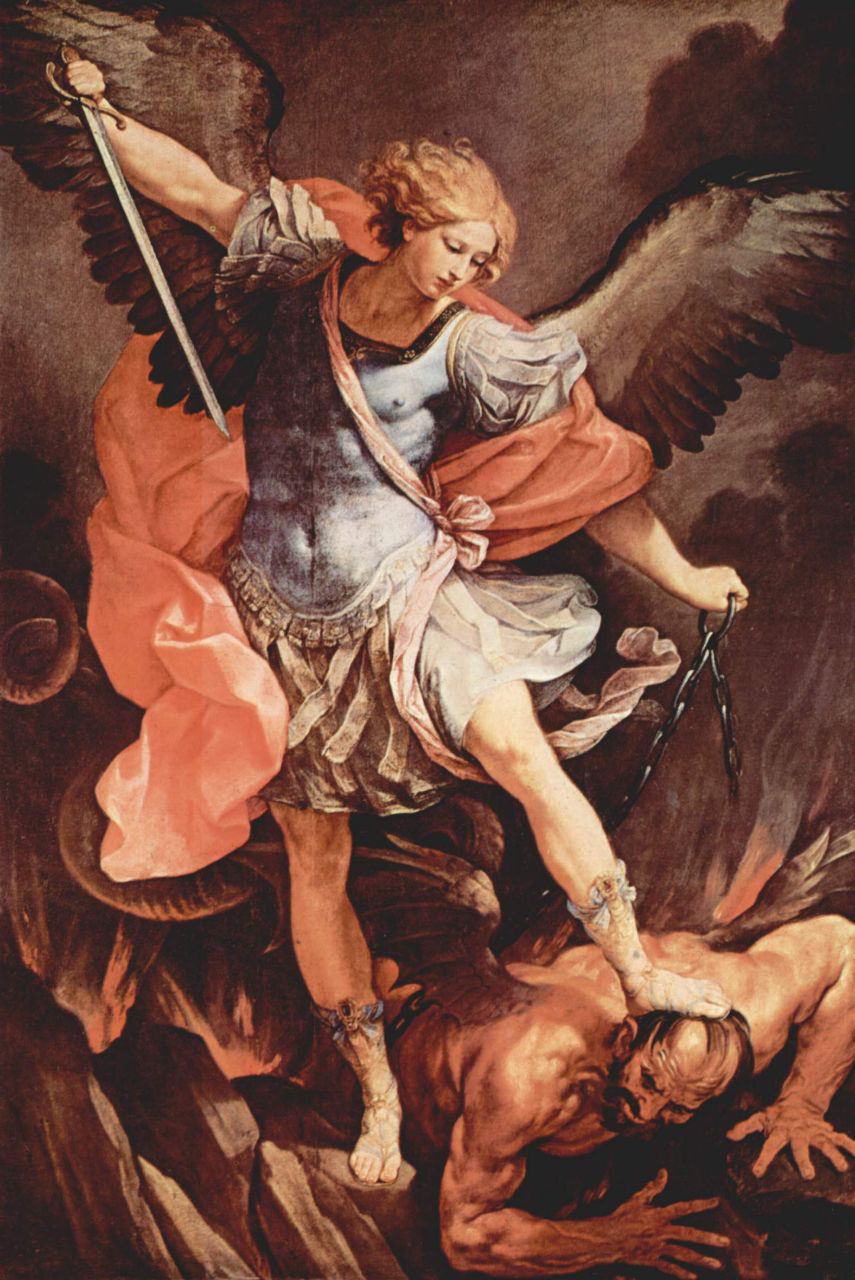
WHY WERE MICHAEL AND SATAN DISPUTING OVER THE BODY OF MOSES (JUDE 9)?

°°°°°°°°°°°°°°°°°°°°°°°°°°°°°°°°°°°°°°°°°°°°°

Jude verse 9 refers to an event which is found nowhere else in Scripture. Michael had to struggle or dispute with Satan about the body of Moses, but what that entailed is not described. Another angelic struggle is related by Daniel, who describes an angel coming to him in a vision. This angel, named Gabriel in Daniel 8:16 and 9:21, tells Daniel that he was “resisted” by a demon called “the prince of Persia” until the archangel Michael came to his assistance (Daniel 10:13). So we learn from Daniel that angels and demons fight spiritual battles over the souls of men and nations, and that the demons resist angels and try to prevent them from doing God’s bidding. 
Jude tells us that Michael was sent by God to deal in some way with the body of Moses, which God Himself had buried after Moses’ death (Deuteronomy 34:5-6).

Various theories have been put forth as to what this struggle over Moses’ body was about. One is that Satan, ever the accuser of God’s people (Revelation 12:10), may have resisted the raising of Moses to eternal life on the grounds of Moses’ sin at Meribah (Deuteronomy 32:51) and his murder of the Egyptian (Exodus 2:12).
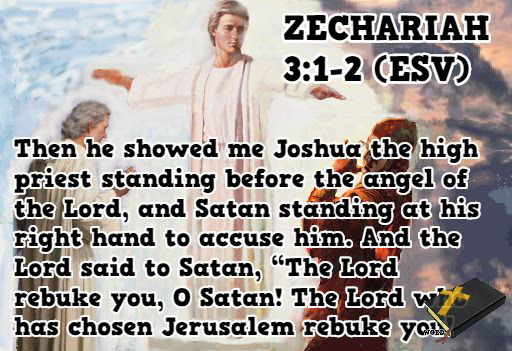
Some have supposed that the reference in Jude is the same as the passage in Zechariah 3:1-2, “Then he showed me Joshua the high priest standing before the angel of the LORD, and Satan standing at his right hand to accuse him. And the LORD said to Satan, ‘The LORD rebuke you, O Satan!’” But the objections to this being the same incident are obvious: (1) The only similarity between the two passages is the expression, “the Lord rebuke you.” (2) The name “Michael” does not occur at all in the passage in Zechariah. (3) There is no mention made of the “body of Moses” in Zechariah, and no allusion to it whatever.
It has also been supposed that Jude is quoting an apocryphal book that contained this account, and that Jude means to confirm that the account is true. Origen (c. 185–254), an early Christian scholar and theologian, mentions the book “The Assumption of Moses” as extant in his time, containing this very account of the contest between Michael and the devil about the body of Moses. That book, now lost, was a Jewish Greek book, and Origen supposed that this was the source of the account in Jude.

The only material question, then, is whether the story is “true.” Whatever the origin of the account, Jude does in fact seem to refer to the contest between Michael and the devil as true. He speaks of it in the same way in which he would have done if he had spoken of the death of Moses or of his smiting the rock. And who can prove that it is not true? What evidence is there that it is not? There are many allusions in the Bible to angels. We know that the archangel Michael is real; there is frequent mention of the devil; and there are numerous affirmations that both bad and good angels are employed in important transactions on the earth. As the nature of this particular dispute over Moses’ body is wholly unknown, conjecture is useless. We do not know whether there was an argument over possession of the body, burial of the body, or anything else.
These two things we do know, however: first, Scripture is inerrant. The inerrancy of Scripture is one of the pillars of the Christian faith. As Christians, our goal is to approach Scripture reverently and prayerfully, and when we find something we do not understand, we pray harder, study more, and—if the answer still eludes us—humbly acknowledge our own limitations in the face of the perfect Word of God.

Second, Jude 9 is the supreme illustration of how Christians are to deal with Satan and demons. The example of Michael refusing to pronounce a curse upon Satan should be a lesson to Christians in how to relate to demonic forces. Believers are not to address them, but rather to seek the Lord’s intervening power against them. If as powerful a being as Michael deferred to the Lord in dealing with Satan, who are we to attempt to reproach, cast out, or command demons?

Wednesday, 2 February 2022

IS IT POSSIBLE TO SELL YOUR SOUL TO THE DEVIL?

°°°°°°°°°°°°°°°°°°°°°°°°°°°°°°°°°°°°°°°°°°°°°

The Bible has no instance of a person “selling his soul” to Satan, and it never implies that making a bargain with the devil is possible. Here is some of what Scripture does reveal about Satan:

1) Satan has power enough to oppose even the angels (Jude 9; Daniel 10:12-13).

2) Satan seeks to deceive by masquerading as an angel of light (2 Corinthians 11:14-15).

3) God has provided the means of defending ourselves against Satan’s attacks (Ephesians 6:11-12).

4) Satan’s power is limited by God’s will (Job 1:10-12; 1 Corinthians 10:13).

5) As “the god of this world,” Satan has dominion over those who live without Christ in the world (2 Corinthians 4:4).
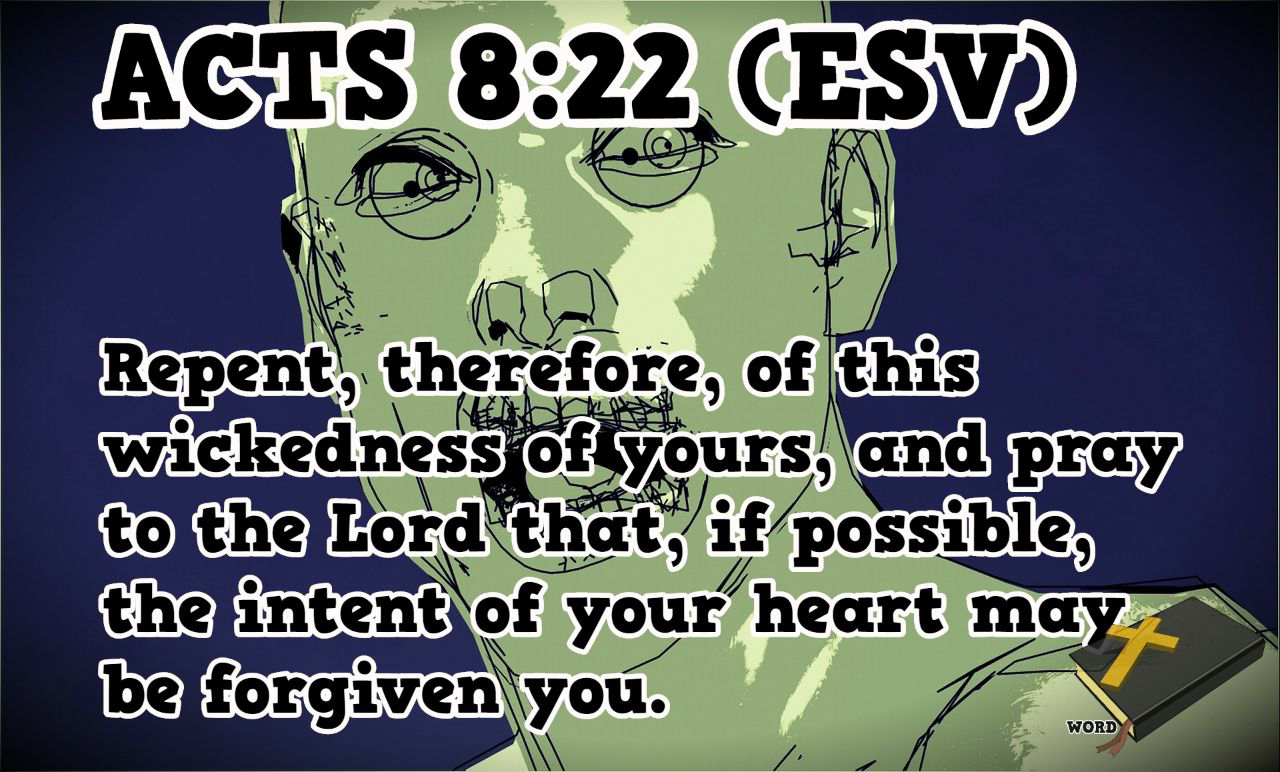
Surely, there are those who suffer under direct satanic control, such as the young medium of Philippi (Acts 16:16-19). And there are those who have devoted themselves to the devil’s work, such as the sorcerers Simon (Acts 8:9-11) and Elymas (Acts 13:8). However, in each of these three examples, the power of God prevails over Satan’s slavery. In fact, Simon is offered a chance to repent (Acts 8:22). Obviously, there had been no irrevocable “selling” of Simon’s soul.
Without Christ, we are all under condemnation of death (Romans 3:23). Before we are saved, we are all in bondage to the devil, as 1 John 5:19 says, “The whole world lies in the power of the evil one.” Praise the Lord, we have a new Master, One who can break the chains of any sin and set us free (1 Corinthians 6:9-11; Mark 5:1-15). 

Wednesday, 19 January 2022

WHO / WHAT WERE THE NEPHILIM?

°°°°°°°°°°°°°°°°°°°°°°°°°°°°°°°°°°°°°°°°°°°°°

The Nephilim (“fallen ones, giants”) were the offspring of sexual relationships between the sons of God and daughters of men in Genesis 6:1–4. There is much debate as to the identity of the “sons of God.” It is our opinion that the “sons of God” were fallen angels (demons) who mated with human females OR possessed human males who then mated with human females. These unions resulted in offspring, the Nephilim, who were “heroes of old, men of renown” (Genesis 6:4). 

Why would the demons do such a thing? The Bible does not specifically give us the answer. Demons are evil, twisted beings—so nothing they do should surprise us. As to a distinct motivation, one speculation is that the demons were attempting to pollute the human bloodline in order to prevent the coming of the Messiah. God had promised that the Messiah would one day crush the head of the serpent, Satan (Genesis 3:15). 
The demons in Genesis 6 were possibly attempting to prevent the crushing of the serpent and make it impossible for a sinless “seed of the woman” to be born. Again, this is not a specifically biblical answer, but it is biblically plausible.

What were the Nephilim? According to Hebraic and other legends (the Book of Enoch and other non-biblical writings), they were a race of giants and super-heroes who did acts of great evil. Their great size and power likely came from the mixture of demonic “DNA” with human genetics. According to the movie Noah, starring Russell Crowe, the Nephilim were fallen angels encased in rock. All that the Bible directly says about them is that they were “heroes of old, men of renown” (Genesis 6:4). The Nephilim were not aliens, angels, “Watchers,” or rock monsters; they were literal, physical beings produced from the union of the sons of God and the daughters of men (Genesis 6:1–4).

What happened to the Nephilim? The Nephilim were one of the primary reasons for the great flood in Noah’s time. Immediately after the mention of Nephilim, God’s Word says, “The LORD saw how great man’s wickedness on the earth had become, and that every inclination of the thoughts of his heart was only evil all the time. The LORD was grieved that he had made man on the earth, and his heart was filled with pain. So the LORD said, ‘I will wipe mankind, whom I have created, from the face of the earth—men and animals, and creatures that move along the ground, and birds of the air—for I am grieved that I have made them’” (Genesis 6:5–7). God proceeded to flood the entire earth, killing everyone and everything other than Noah, his family, and the animals on the ark. All else perished, including the Nephilim (Genesis 6:11–22).

Were there Nephilim after the flood? Genesis 6:4 tells us, “The Nephilim were on the earth in those days—and also afterward.” It seems that the demons repeated their sin sometime after the flood as well. However, it likely took place to a much lesser extent than it did prior to the flood. When the Israelites spied out the land of Canaan, they reported back to Moses: “We saw the Nephilim there (the descendants of Anak come from the Nephilim). We seemed like grasshoppers in our own eyes, and we looked the same to them” (Numbers 13:33). This passage does not say the Nephilim were genuinely there, only that the spies thought they saw the Nephilim. It is more likely that the spies witnessed very large people in Canaan and in their fear believed them to be the Nephilim. Or it is possible that after the flood the demons again mated with human females, producing more Nephilim. It is even possible that some traits of the Nephilim were passed on through the heredity of one of Noah’s daughters-in-law. Whatever the case, these “giants” were destroyed by the Israelites during their invasion of Canaan (Joshua 11:21–22) and later in their history (Deuteronomy 3:11; 1 Samuel 17).

What prevents the demons from producing more Nephilim today? It seems that God put an end to demons mating with humans by placing all the demons who committed such an act in isolation. Jude verse 6 tells us, “The angels who did not keep their positions of authority but abandoned their own home—these he has kept in darkness, bound with everlasting chains for judgment on the great Day.” Obviously, not all demons are in “prison” today, so there must have been a group of demons who committed further grievous sin beyond the original fall. Presumably, the demons who mated with human females are the ones who are “bound with everlasting chains.” This would prevent any more demons from attempting such sin.